Articles Archives — Page 6 of 8 — Carrington Malin

November 8, 2019
WEF-technology-policy.jpg

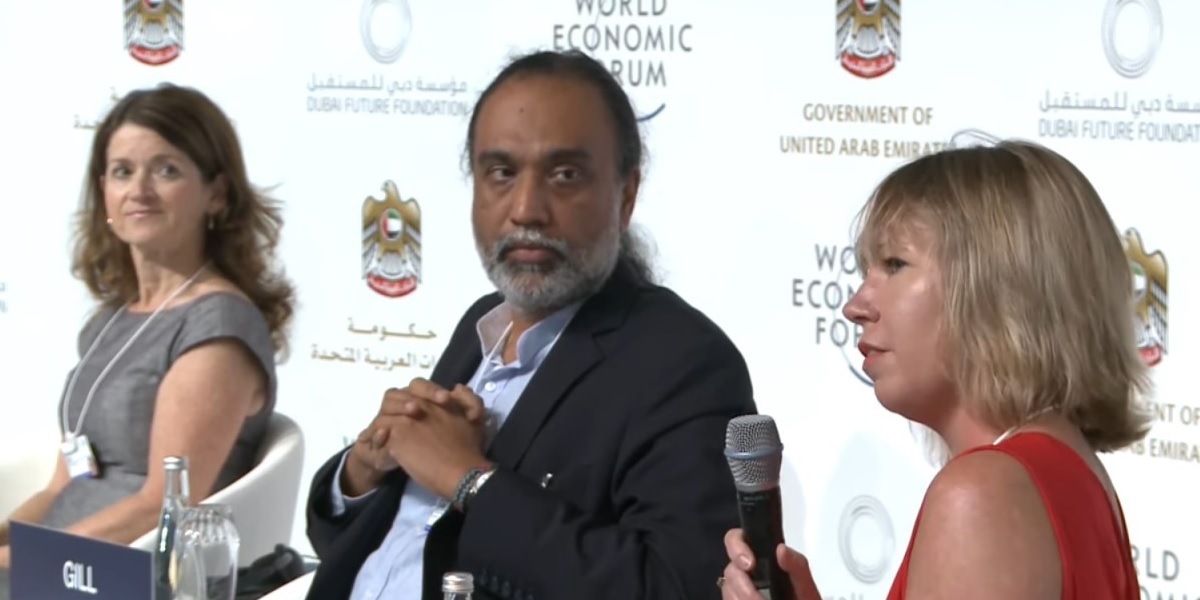
One of the topics discussed at this week’s annual World Economic Forum Global Future Council in Dubai was how governments are coping with setting the rules for disruptive technologies. Given the now daily news coverage on the divergent opinions regarding the threats and opportunities brought by artificial intelligence (AI), it should come as no surprise that policymakers are coming under extreme pressure to do better.

It’s not simply the scale of the challenge, with government, industry and other institutions having to consider a wider range of technologies and technology implications than ever before. It is the sheer pace of change driving an unrelenting cycle of innovation and disruption, and, as AI becomes more commonplace, the pace of innovation and disruption will only further accelerate.

Continue reading this story on The National.

November 2, 2019
ai-brand-avatar.jpg

Do brands need AI avatars of themselves? Last week at London’s One Young World Summit, Biz Stone co-founder of Twitter and Lars Buttler, CEO of San Francisco-based The AI Foundation, announced a new concept they called ‘personal media’ and claimed that artificial intelligence is the future of social change. The Foundation is working on new technology that Buttler says will allow anyone to create an AI avatar of themselves, which would look like them, talk like them and act like them. Empowered by AI avatars, people will then be able to, potentially, have billions of conversations at the same time.

So, what does this new kind of AI communications mean for brands?

Continue reading this story on Linkedin


October 31, 2019
one-young-world-summit-2019.jpg

Twitter co-founder Biz Stone and Lars Buttler, chief executive of San Francisco-based The AI Foundation, introduced a new concept of ‘personal media’, enabled by artificial intelligence at last week’s One Young World Summit in London. The company is developing technology to allow anyone to create an artificial version of themselves to represent their interests anytime, anywhere. These personal avatars will look, sound and act like their creators.

According to the Stone and Buttler, just as the world moved from the mass media era to the social media era, it will now begin to move into the age of ‘personal media’.

Continue reading this story on The National.


October 24, 2019
blockchain-smart-farming.jpg

One of the most memorable lines from sci-fi comedy The Hitchhiker’s Guide to the Galaxy is the introduction to its tea-drinking, central protagonist Arthur Dent. The original radio script of Douglas Adams says of Dent: “He no more knows his destiny than a tea leaf knows the history of the East India Company.”

Tea was a recurring theme in Adams’ work, not least of all because it provided a point of contrast. What could be more far removed from stories of space travel, robots and artificial intelligence than the humble tea leaves?

Continue reading this story on The National.


September 25, 2019
company-chatbot.jpg

Despite the proclamations of enhanced customer experience, much of the interest and deployment of chatbots today is driven by cost savings. Customer service departments and the CFOs that approve their budgets have an opportunity to significantly reduce HR costs and add a new service that also has the prospect of being a revenue generator.

However, there are good reasons why large companies replacing human customer service with an automated customer service agent should consider chatbot projects as brand and customer experience initiatives first, and not simply a software roll-out.

Continue reading this story on Linkedin.


September 19, 2019
have-your-ai-call-my-ai.jpg

Google CEO Sundar Pichai delighted the audience at the Internet giant’s annual developer event Google I/O last year with a demonstration of an upcoming feature for Google Assistant currently called Duplex. Live in front of the Mountain View audience, Pichai showed Google Assistant making a telephone call to a hair salon, talking to the salon representative who answered the phone, negotiating the time of the appointment and making a booking for the user.

The Google Duplex demo gave the audience (and Youtube viewers around the world) a tiny glimpse into our artificial intelligence future: a future where our intelligent devices will be able to make our calls, restaurant reservations, flight bookings and buy us tickets for the theatre.

Continue reading this article on Arabnet.


September 16, 2019
facial-recognition-hotel-1-1280x640.jpg

Thousands of retail stores in hundreds of cities across China are already using facial recognition technology to accept payments from their customers. Shoppers find it fast and convenient, in particular when self-checkout systems allow consumers to skip store checkout queues. In fact, it is becoming the new standard for in-store electronic payments, with Chinese shoppers even using face scan payments for buying everyday grocery items such as a loaf of bread.

But, thousands of kilometres away in the British Isles, public distrust in facial recognition technology seems to be intensifying.

Continue reading this story on Linkedin


September 10, 2019
brand-chatbots-cx.jpg

More than half of employers don’t have a written policy on the ethical use of AI or bots, whilst AI chatbots and how they interact with customers play a growing role in shaping brand perceptions.

If you’ve implemented a new AI chatbot platform, then your brand’s chatbot can be made available to customers 24/7, respond instantly to queries and resolve up to 80 percent of questions without the need to involve a human customer service agent. However, customer service agents are generally bound by contracts, employee codes of conduct and operating procedures. Do the same rules apply for your chatbot?

Continue reading this story on Linkedin


September 6, 2019
emotional-ai-and-gdpr.jpg

The increasing spread of emotional AI, brings with it new concerns about privacy, personal data rights and, well, freedom of expression (although, in a sense, perhaps, not thought about much in the past). The data that the emotion recognition captures could be considered to be biometric data, just like a scan of your fingerprint. However, there is little legislation globally that specifically addresses the capture, usage rights and privacy considerations of biometric data. Until GDPR.

Continue reading this story on Linkedin