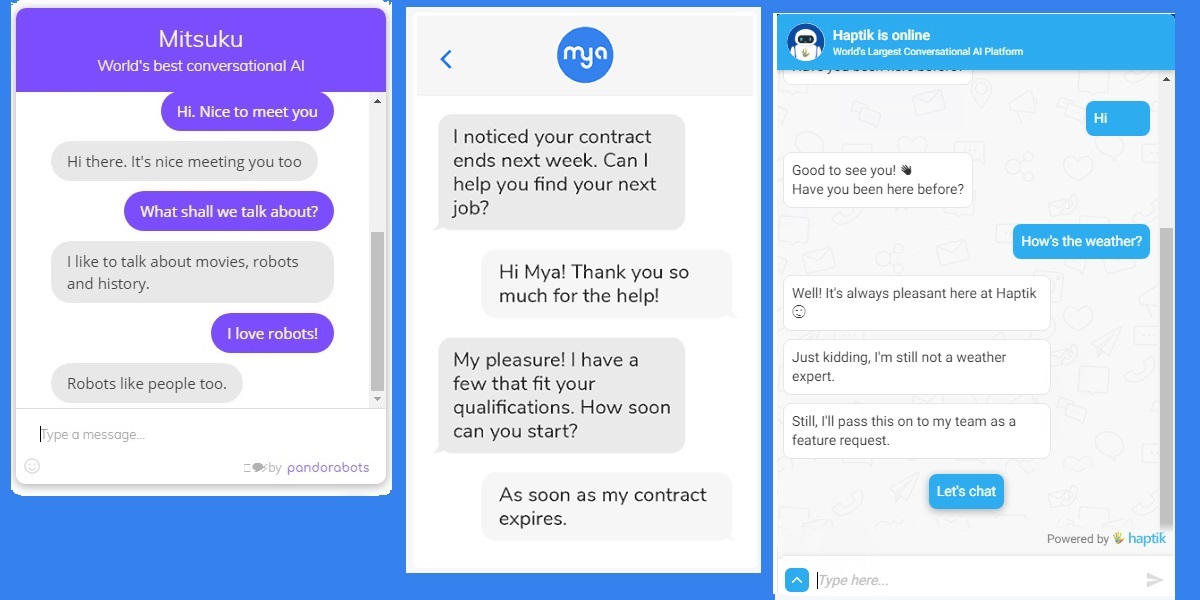
The biggest barrier for AI First channels to overcome is a human one: trust. People are now, for the most part, willing to accept that AI can be useful, but there are plenty of things that they won’t trust it with. This is not because they are not comfortable with accepting the perceived risks of AI, but in commercial use, conversational AI has clearly failed to meet expectations.
At least two-thirds of consumers would prefer to seek human assistance over any automated service.
New research from ServiceNow sums the situation up quite nicely. A survey of 1,000 UAE residents found that 76% of consumers recognise the importance of a good chatbot service. However, respondents were also asked to rank their first choice of support channel according to their mood (for example calm and focused, or impatient and frustrated etc.). At least two-thirds of consumers – across all types of moods – would prefer to seek human assistance over any automated service.
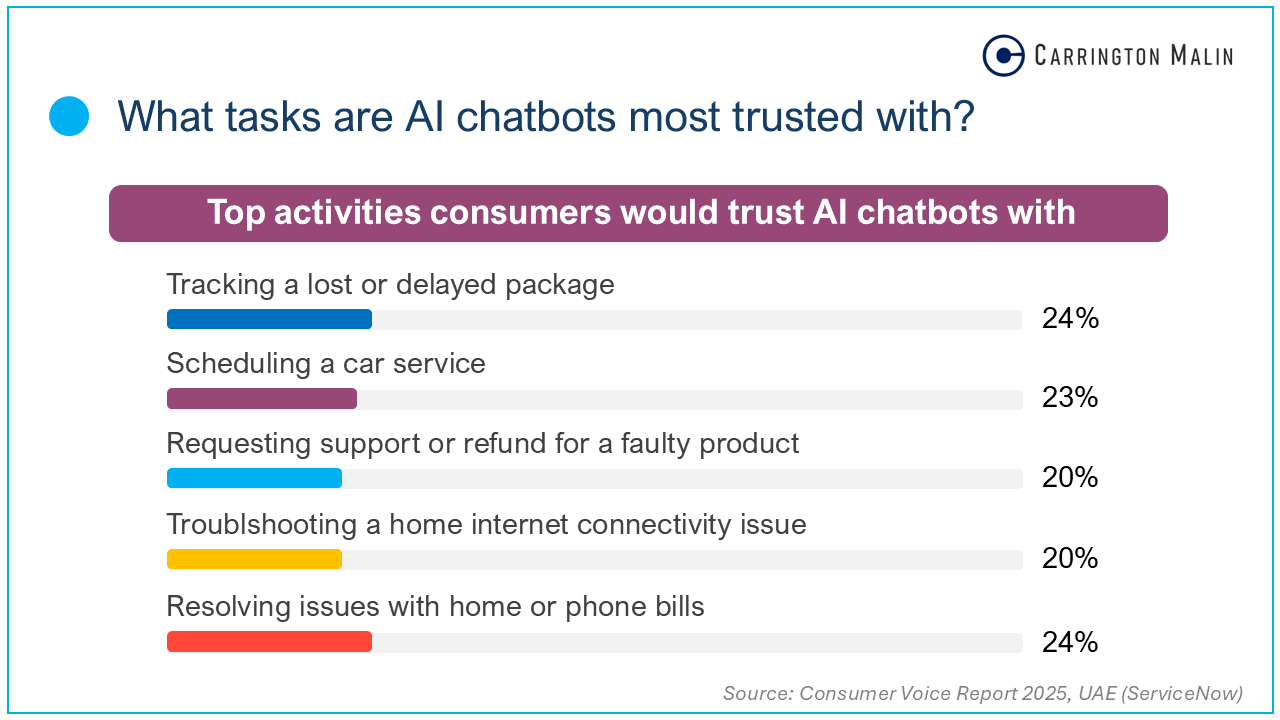
This is an issue of trust. In the same survey, people were asked what they would trust an AI chatbot with. The most popular answer was ‘Tracking a lost or delayed package’, but with only 24% of respondents admitting that this is something they would trust a chatbot to do.
Unrealistic expectations?
Conversational AI clearly has a long way to go before consumers will trust company chatbots or voicebots, but this doubt remains in the face of enormous optimism and positivity towards AI in general in the UAE. The sentiment towards conversational AI in customer service provides a stark contrast to the attitudes of consumers towards the use of AI in daily life and their use of virtual assistants.
Another new survey on attitudes towards AI, this time from Melbourne Business School and KPMG, found that 86% of UAE respondents accept or approve of AI, with 65% confirming that they are willing to trust AI. So, it would seem that business has a problem. Even in a country as overwhelmingly optimistic about the benefits of AI, with rising levels of trust in the technology, businesses are still struggling to build that trust in their own conversational AI channels.
58% of respondents already expect that company chatbots should be able to respond differently according to their mood.- ServiceNow
It would also seem that the near ubiquitous use of ChatGPT and other virtual assistants is proving to be a mixed blessing for AI’s use in customer experience. OpenAI‘s ChatGPT, Google Gemini, X‘s Grok and others have been instrumental in raising expectations for how commercial conversational AI channels should behave and how they should respond to consumers: some would say to unrealistic levels! In ServiceNow’s UAE survey, 58% of respondents already expect that company chatbots should be able to respond differently according to their mood.
GenAI is becoming indispensable
On the plus side, the UAE’s enthusiasm for GenAI has meant that consumers are becoming a lot more comfortable communicating with AI in general, and many are adopting virtual assistants as their go-to channel for a variety of tasks from Internet research, to writing emails and generating business documents, to comparison shopping.
In fact, this month’s UAE Retail Report 2025 from global payment platform Adyen informs that 70% of UAE consumers have used ChatGPT or similar AI assistants to help them with shopping (more than double the 34% average across EMEA). The report also notes that the use of AI assistants for shopping by UAE consumers has surged 44% since 2024.
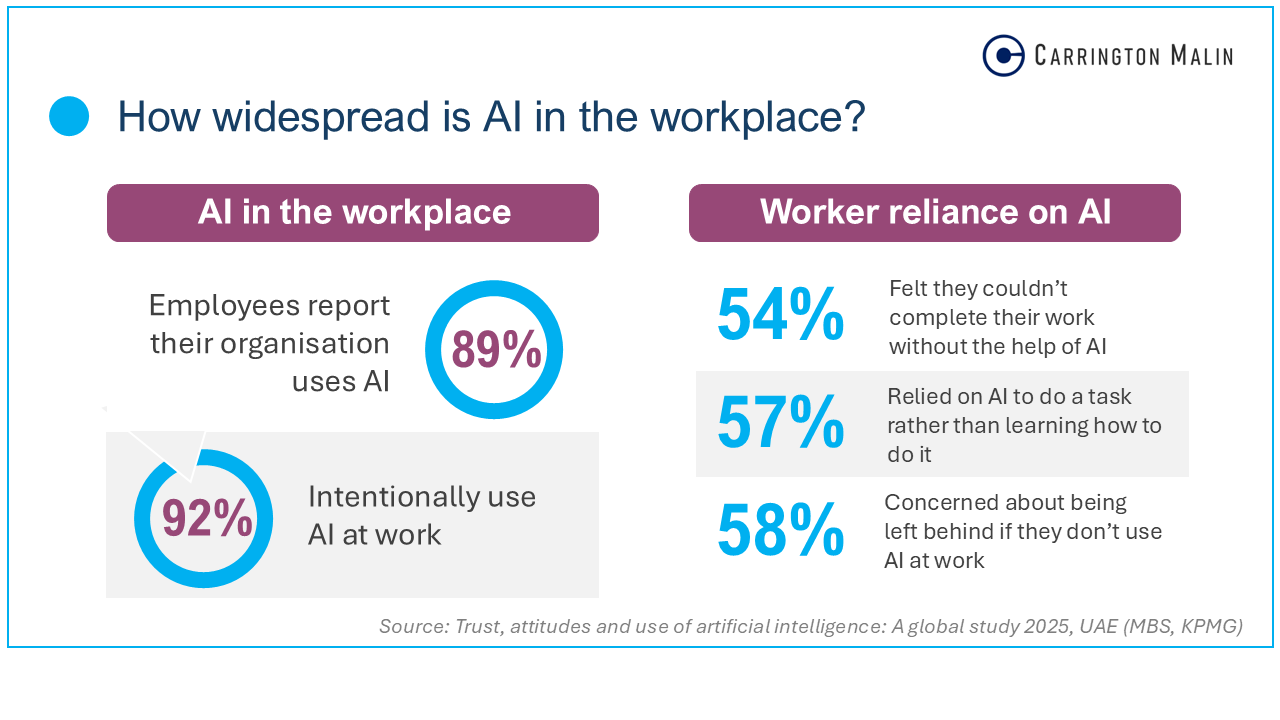
This means that are growing numbers of people using conversational AI on a daily basis. The KPMG report found that 92% of office workers in the UAE intentionally use AI at work, while 54% felt that they couldn’t complete their work without using AI! This usage also takes place in the knowledge that there are risks that come from using AI. Of those surveyed, 75% were concerned about negative outcomes from AI and 64% admitted that they made mistakes in their work as a result of using AI.
A question of value
Therefore, it would appear that even with the knowledge that using AI comes with certain risks, most consumers are still comfortable in using virtual assistants to help them, and are using them for more and more different tasks. Why? Well, why does anyone take to using anything that has attendant risks? Because consumers believe that the perceived value outweighs the perceived risks. I would argue strongly that consumers tend to avoid company chatbots when they can because they don’t believe that the perceived value outweighs the perceived risks.
When ServiceNow asked survey participants what the top barriers were for consumers in using AI chatbots for customer service, 93% agreed there were barriers. Although, when asked what their top barrier was, no one reason accrued more than a 14% vote (which was ‘They struggle with complex tasks”). So it looks very like the main barrier could simply be not meeting increasingly high consumer expectations. 47% of UAE respondents confirmed this, agreeing that the effectiveness of AI chatbots had not met their expectations.
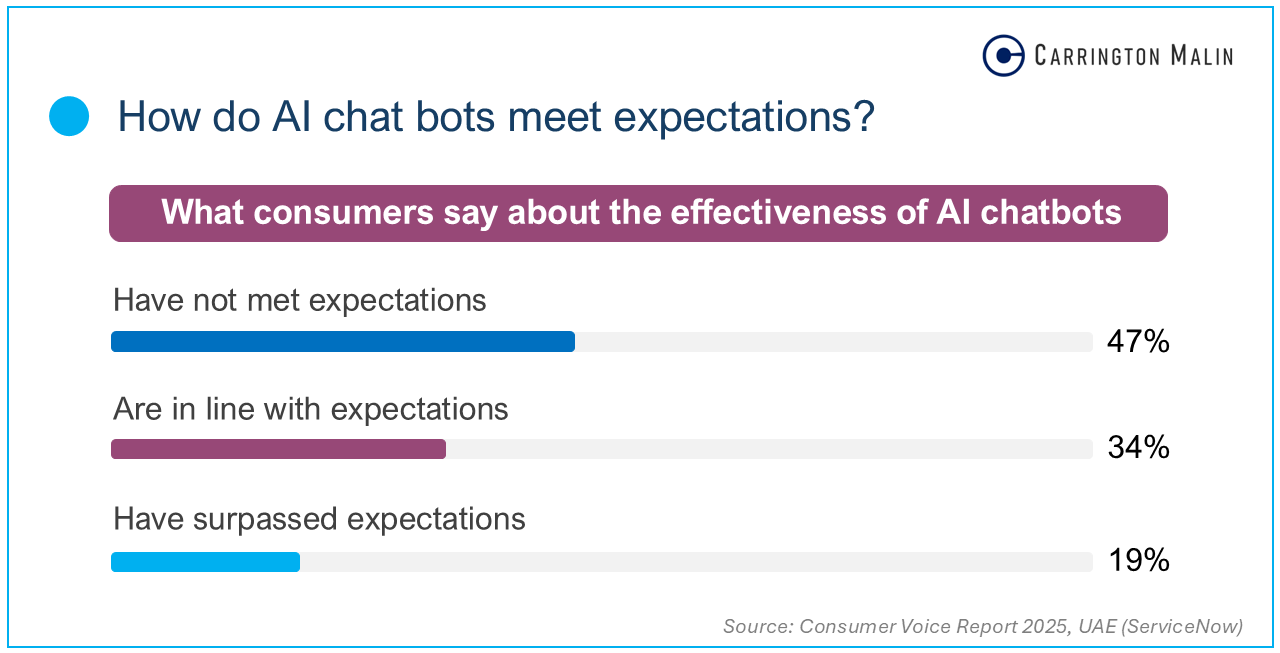
In the same survey 34% said that the effectiveness of AI chatbots had met their expectations, and encouragingly 19% said that effectiveness had exceeded their expectations. The fact remains though, that if almost half of your customers believe that you have failed to meet expectations, you have do have problems!
If almost 50% of your customers believe that you have failed to meet expectations, you have do have problems!
Rising consumer expectations are a fact of life for big brands, service providers, retailers, public authorities and many other kinds of organisation that must provide a positive customer experience. However, the comparison between free-to-use GenAI assistants and commercial chatbots and voicebots is hardly a fair one, but it’s one that is impossible to erase from the minds of consumers. The consequences of ChatGPT failing to meet expectations once and a while, are almost zero, but in a commercial environment, failing to handle a customer enquiry appropriately can end the relationship and so have a financial cost.
Raising the bar
It is clear then, company chatbots shouldn’t try to become general purpose tools like ChatGPT, because the risks are too great. It is also clear that the value proposition for most company chatbots is not clear and a common perception is that they are the poor, awkward, error-prone relation of human-to-human customer service. Despite using one of the most advanced customer service channels ever deployed in commerce, the majority of conversational AI simply has no ‘wow ‘!
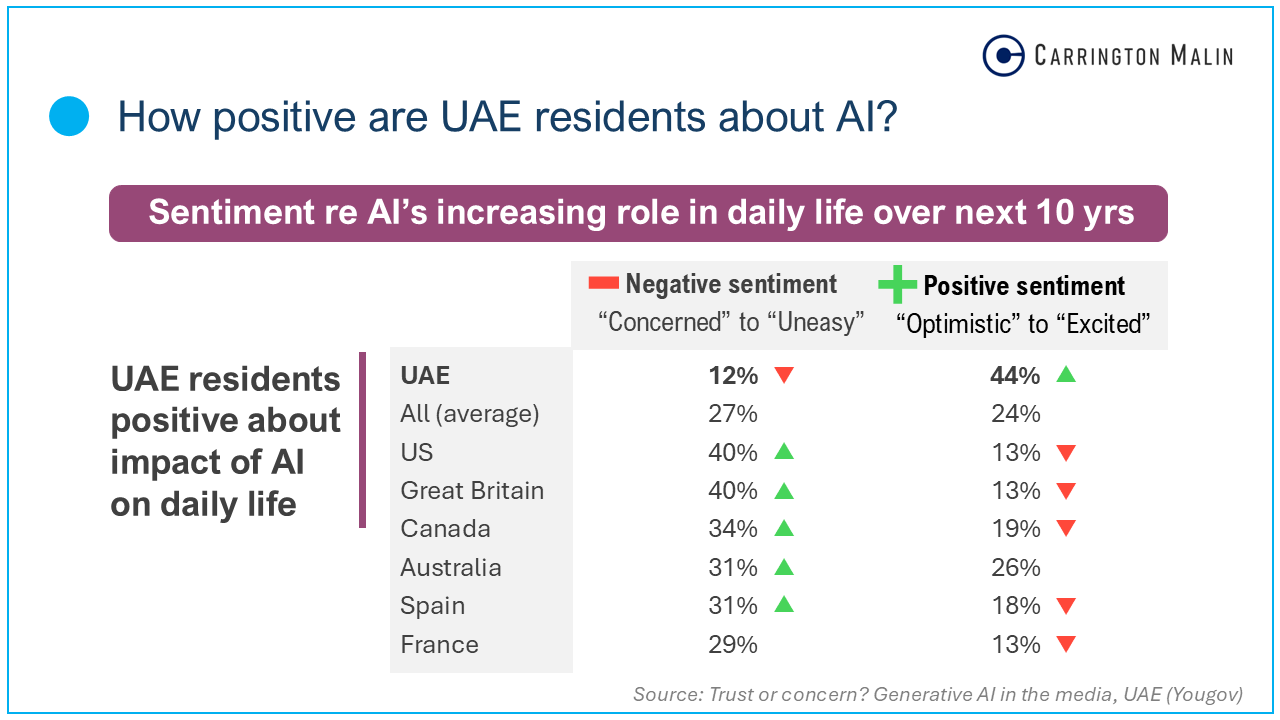
The failure of chatbots and voicebots to meet consumer expectations is not a UAE, or a regional, problem. Organisations worldwide are faced with similar challenges. However, organisations in the UAE may have distinct advantages over counterparts in other geos, in particular Europe and north America. In a new global YouGov survey, the Emirates is markedly more positive about AI than Western countries and getting more so. The UAE’s optimism and acceptance towards Ai arguably make it the ideal testing ground to innovate, iterate and develop conversational AI services that raise the bar.
LINKS
- Consumer Voice Report 2025 (ServiceNow)
- UAE Retail Report 2025 (Adyen)
- Trust, attitudes and use of AI: A global study 2025 (MBS, KPMG)
- Trust or concern? Generative AI in the media, UAE (Middle East AI News)
This article first appeared in my June 2025 AI First newsletter.